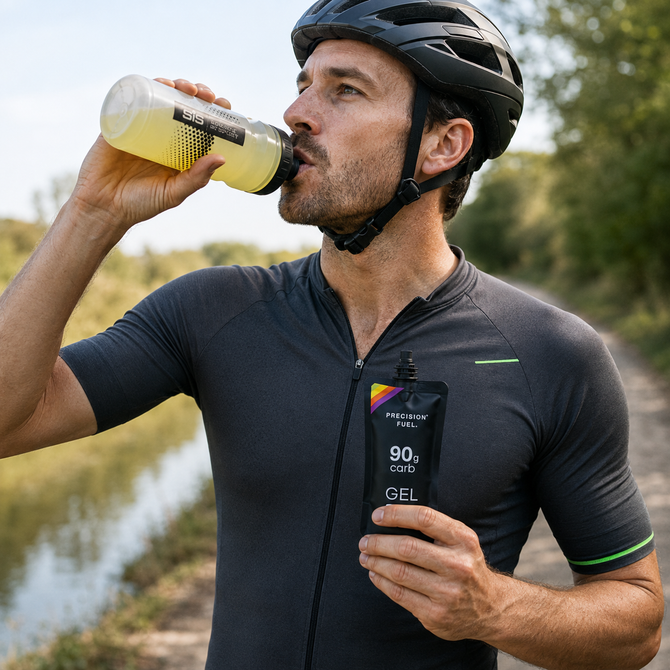


SiS BETA Fuel and SiS GO Isotonic are both designed to provide carbohydrate during training and racing, but they are built for different fuelling strategies. BETA gives you more carbohydrate in each gel, while GO is a smaller isotonic serving that can be taken without additional water.
So which should you choose? For longer endurance events and higher carbohydrate targets, BETA is the more efficient option per gel. For shorter sessions, runners who prefer smaller servings or situations where water is limited, GO can be the simpler choice.
SiS BETA Fuel vs GO Isotonic: the quick answer
- Choose SiS BETA Fuel if you want 40g of carbohydrate per gel and fewer sachets during long events.
- Choose SiS GO Isotonic if you prefer a smaller 22g serving with a light texture that can be taken without extra water.
- Choose BETA for value per 30g of carbohydrate when buying the box of 30, based on the current listed prices.
- Choose GO for lower upfront cost or when you want smaller, more frequent servings.
Key differences at a glance
- SiS BETA Fuel: 40g carbohydrate per gel, dual-source maltodextrin-to-fructose ratio of 1:0.8, designed for longer sessions and higher carbohydrate targets.
- SiS GO Isotonic: 22g carbohydrate per gel, isotonic formula, light smooth texture and designed to be taken without additional water.
- BETA serving size: more carbohydrate per sachet, which means fewer gels for the same carbohydrate target.
- GO serving size: smaller carbohydrate portions, which can make it easier to spread intake across a session.
SiS BETA Fuel: who is it best for?
Each SiS BETA Fuel Gel provides 40g of carbohydrate. The product uses a 1:0.8 maltodextrin-to-fructose ratio and is designed for exercise lasting two hours or more, including marathons, sportives, triathlons and ultra-distance events.
The higher carbohydrate content is the main reason to choose BETA. If you are working towards 60g or more per hour, a 40g gel gets you closer to your target with each serving. It can also reduce the number of sachets you need to carry and open during a long race.
BETA is likely to suit you if:
- you are fuelling a marathon, long sportive or endurance event
- you are working towards a higher carbohydrate intake per hour
- you want more carbohydrate from each gel
- you prefer to carry fewer sachets
- you have tested higher-carbohydrate servings in training
The BETA range is available as single serves, boxes of six and boxes of 30, with flavour options including Orange, Strawberry & Lime and Neutral.
SiS GO Isotonic: who is it best for?
Each SiS GO Isotonic Energy Gel provides 22g of carbohydrate. Its isotonic formula is designed to be taken without additional water, and its smooth, light texture can be useful when you want a smaller, easy-to-consume serving.
GO is a practical option for shorter training sessions, races where you want regular smaller servings or situations where carrying water is difficult. Because each sachet contains less carbohydrate than BETA, you may need more GO gels to reach the same hourly target.
GO is likely to suit you if:
- you prefer smaller carbohydrate servings
- you want a gel that can be taken without additional water
- you are fuelling shorter runs, rides or races
- you prefer a light, smooth gel texture
- you want a lower upfront price for a box
The GO range is available as single serves, packs of six and boxes of 30, with a wide choice of flavours including Orange, Fruit Salad, Lime & Lemon, Blackcurrant, Apple, Pineapple, Cherry, Tropical and Pink Grapefruit.
Carbohydrate comparison: 40g vs 22g
The most important difference is the amount of carbohydrate in each serving. One BETA gel provides 40g, while one GO gel provides 22g.
To get approximately 60g of carbohydrate per hour, you could use:
- BETA: one 40g gel plus part of another carbohydrate serving, depending on the rest of your plan.
- GO: roughly three gels provide 66g of carbohydrate.
This does not make one product universally better. BETA means fewer sachets and a larger serving. GO gives you more opportunities to take smaller amounts. Your choice should match what your stomach handles comfortably and what you have practised.
Current price and cost-per-carbohydrate comparison
Based on the current listed North Sports prices, the pack comparison looks like this:
| Product | Pack price | Carbohydrate | Price per gel | Approx. cost per 30g carbohydrate |
|---|---|---|---|---|
| SiS BETA single | £2.20 | 40g | £2.20 | £1.65 |
| SiS BETA box of 6 | £14.00 | 40g each | £2.33 | £1.75 |
| SiS BETA box of 30 | £59.99 | 40g each | £2.00 | £1.50 |
| SiS GO single | £1.75 | 22g | £1.75 | £2.39 |
| SiS GO pack of 6 | £10.50 | 22g each | £1.75 | £2.39 |
| SiS GO box of 30 | £40.00 | 22g each | £1.33 | £1.82 |
The cost per 30g figure is calculated by dividing the price per serving by the carbohydrate per serving, then multiplying by 30. Prices can change, so check the product page for the latest pack price before ordering.
GO is cheaper per sachet, particularly in the box of 30. However, BETA provides more carbohydrate per gel and the box of 30 currently works out cheaper per 30g of carbohydrate. The fairest comparison depends on whether you care most about upfront spend, number of sachets or carbohydrate value.
Which is better for a marathon?
For a marathon, BETA is often the more efficient option if you are targeting a higher carbohydrate intake. Its 40g servings can reduce the number of gels you need to carry, and the product is designed around longer endurance efforts.
GO can still work well for a marathon if you prefer smaller servings, want to take gels without separate water or have already trained successfully with the product. You may need more sachets to reach the same carbohydrate target, so plan your carrying capacity before race day.
Whichever product you choose, start fuelling early and use a schedule you have practised. Our marathon fuelling plan explains how to work out your total carbohydrate requirement.
Which is better for a half marathon?
For a half marathon, GO may be enough for runners who want one or two smaller servings, especially for a finish time under two hours. BETA is useful if you are racing for longer, aiming for more carbohydrate or prefer to get more fuel from each sachet.
Consider the number of servings you will realistically take. A product that looks stronger on paper is not the right choice if you find the serving too large or have not tested it at race pace. Our guide to how many gels you need for a half marathon can help you build the timing plan.
Formulation and texture
BETA uses a dual-source carbohydrate formulation with a 1:0.8 maltodextrin-to-fructose ratio. It is aimed at athletes who want to take on higher carbohydrate amounts during longer exercise.
GO uses an isotonic formulation and has a light, smooth texture. The practical advantage is that it is designed to be consumed without additional water. That can be useful when aid stations are limited or you want to keep your hydration plan separate from your gel timing.
Neither formulation removes the need to practise. Pace, heat, hydration, pre-race food and personal tolerance all affect how a product feels during exercise.
Can you use BETA and GO together?
Yes. You could use BETA when you want a larger carbohydrate serving and GO when you want a smaller top-up or a gel that does not require water. The important thing is to calculate the total carbohydrate and test the combination before race day.
A mixed strategy might use BETA during the main part of a long ride, with GO as a smaller serving between aid stations. A runner might prefer GO early and BETA later, or simply use one range consistently. There is no need to mix products unless it makes your plan easier.
Our verdict
Choose SiS BETA Fuel if you want higher carbohydrate per gel, fewer sachets and better current value per 30g from the box of 30. It is the stronger fit for long endurance events and athletes working towards higher carbohydrate targets.
Choose SiS GO Isotonic if you want smaller servings, a light texture, no additional water with the gel and a lower upfront price. It is a practical fit for shorter sessions, smaller fuelling steps and runners or cyclists who already know it agrees with them.
Browse both ranges, along with other race-day options, in the Fuel collection. The best choice is the product you can digest, carry and take consistently when the session gets hard.