

What Is an Energy Gel?
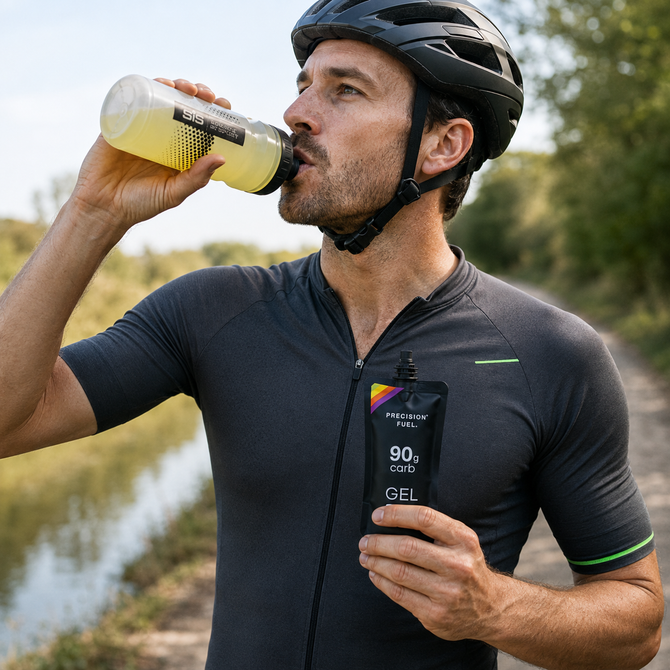
Energy gels are concentrated carbohydrate supplements designed to deliver fast, digestible fuel during sustained exercise. They're compact, lightweight, and engineered to be consumed on the move — making them a staple for runners, cyclists, and triathletes who need to maintain performance without slowing down.
Unlike solid food, gels are formulated to absorb quickly through the gut, giving your muscles a near-immediate source of glucose and fructose to keep you going when glycogen stores start to deplete.
When Should You Start Taking Gels?
The most common mistake athletes make is waiting until they feel tired before reaching for a gel. By that point, you're already behind on fuelling.
A better approach:
- Runs and rides under 60 minutes: You generally don't need a gel. Your glycogen stores are sufficient for shorter efforts.
- 60–90 minutes: Consider one gel around the 45-minute mark, especially if the effort is high intensity.
- 90 minutes and beyond: Start fuelling early — around 30–45 minutes in — and continue at regular intervals throughout.
The goal is to stay ahead of the energy deficit, not to chase it.
How Many Gels Do You Actually Need?
This depends on your body weight, sweat rate, and the intensity and duration of your session — but a practical starting point is:
- 30–60g of carbohydrate per hour for efforts up to 2.5 hours
- Up to 90g of carbohydrate per hour for longer efforts, provided you're using a mix of glucose and fructose sources (which your gut can absorb more efficiently together)
As a rough guide:
| Session length | Gels needed (approx.) |
|---|---|
| 60–90 min | 1–2 gels |
| 90 min – 2.5 hrs | 2–4 gels |
| 2.5 hrs+ | 4–6+ gels |
These are starting points. Train your gut — practise fuelling in training so race day isn't the first time your digestive system has to handle it.
Choosing the Right Gel for Your Session
Not all gels are the same. The key variables are carbohydrate content, caffeine, and consistency.
Browse the full
Do You Need to Take Gels with Water?
Yes — always. Gels are hypertonic, meaning they draw water into your gut to aid absorption. Taking them without water can slow digestion and cause GI discomfort, especially during hard efforts.
Aim to take each gel with 150–250ml of water. If you're also using an electrolyte drink, time your gel intake separately to avoid overloading your gut at once.
Gels vs. Chews vs. Drink Mixes
Gels aren't the only way to fuel. Depending on your preference and the demands of your session, you might also consider:
-
PF 30 Chews /PF 60 Chews — Solid-format carbohydrate for athletes who prefer chewing, or want to vary texture during long events. -
Carb Only Drink Mix — Combines hydration and carbohydrate in one bottle. Useful when carrying multiple gels isn't practical. -
Carb & Electrolyte Drink Mix — Adds electrolytes to the carb mix, ideal for hot conditions or heavy sweaters.
Many athletes use a combination — gels for convenience and precision, drink mix for background fuelling.
Key Takeaways
- Start fuelling before you feel tired — around 30–45 minutes into efforts lasting 90 minutes or more.
- Aim for 30–60g of carbs per hour for most sessions; up to 90g for longer, harder efforts.
- Always take gels with water.
- Train your gut in training — don't experiment with new products on race day.
- Match the gel to the session: standard for training, caffeine for key efforts, high-carb formats for long events.