

More Data Isn't the Same as Better Training
The wearables market has exploded. GPS watches, heart rate monitors, power meters, recovery boots, sleep trackers, vagus nerve stimulators — there's a device for every metric imaginable. But more data doesn't automatically mean better training. The athletes who get the most from performance tech are the ones who know what they're measuring, why it matters, and how each piece connects to the others.
This guide walks through how to build a training setup that's genuinely useful — starting from the essentials and building progressively toward a comprehensive performance system.
Layer 1: The Foundation — A GPS Watch
Everything starts here. A GPS watch is the central hub of your training data — recording pace, distance, heart rate, elevation, and increasingly, recovery and sleep metrics in a single device worn around the clock.
What to prioritise:
- Multi-band GPS for accuracy in challenging environments
- Training load and recovery metrics — not just data recording, but interpretation
- Sleep tracking quality — your watch should be giving you a recovery picture, not just a step count
- Ecosystem compatibility with the platforms you use (Strava, TrainingPeaks, coaching apps)
Recommended:
-
Polar Vantage V3 — The most sophisticated training intelligence available. Dual-band GPS, ECG, skin temperature, and Polar's industry-leading recovery and sleep analysis. The benchmark for serious multisport athletes. -
Coros Pace 4 — Exceptional battery life, dual-frequency GPS, and clean software. The sweet spot for runners and cyclists who want accuracy and reliability without the flagship price. -
Suunto Race 2 — Premium titanium build, AMOLED display, and comprehensive multisport profiles. Strong for athletes in the Suunto ecosystem. -
Polar Grit X Pro — Built for outdoor and trail athletes. Military-grade durability, full mapping, and long battery life for demanding environments.
For a full breakdown of how to choose between models, see our
Layer 2: Accurate Heart Rate Data
Wrist-based optical heart rate is convenient, but it has limitations — particularly during intervals, high-cadence cycling, and HRV monitoring. Adding a dedicated heart rate monitor meaningfully improves the quality of your training data.
Chest straps — most accurate, especially during intensity changes and for HRV:
-
Polar H10 — The benchmark. Accurate enough for clinical research, compatible with virtually any watch or cycling computer via Bluetooth and ANT+. -
Polar H9 — Bluetooth-only, no onboard memory. A reliable, lower-cost alternative for athletes who don't need ANT+ compatibility. -
Suunto Smart Heart Rate Belt — Pairs natively with Suunto watches; connects via Bluetooth to third-party devices. -
4iiii Viiiiva — Dual Bluetooth/ANT+ with ANT+-to-Bluetooth bridging. Useful for athletes with mixed equipment setups.
Optical arm bands — better than wrist optical, more comfortable than a chest strap:
-
Polar Verity Sense — The benchmark optical arm band. Significantly more accurate than wrist optical during cycling, connects via Bluetooth and ANT+, and records independently for post-session sync. -
Coros Heart Rate Monitor — Arm-based optical that pairs natively with Coros watches. Solves the cadence interference issue that affects wrist optical during cycling.
For a full comparison of chest strap vs optical technology, see our
Layer 3: Power Measurement (Cyclists)
For cyclists, power is the most objective training metric available — unaffected by heat, fatigue, or motivation in the way that heart rate can be. A power meter transforms how you train and race on the bike.
Layer 4: Audio — Training with Awareness
Music and podcasts are a legitimate performance tool — they improve perceived effort, motivation, and session enjoyment. For outdoor athletes, the key is choosing audio that doesn't compromise situational awareness.
The Shokz open-ear range is built specifically for this:
-
Shokz OpenRun Pro 2 — The benchmark for running and cycling. Bone conduction, full ambient awareness, secure behind-the-neck fit, and 10 hours of battery. -
Shokz OpenFit 2 — True wireless open-ear clip design. Better sound than bone conduction, full awareness, and a more versatile form factor for gym and everyday use. -
Shokz OpenSwim Pro — IP68 waterproof with both onboard storage and Bluetooth. The only option for triathletes who want audio across swim, bike, and run.
Browse the full
For a full breakdown of what to look for, see our
Layer 5: Recovery Technology
Training adaptation happens during recovery — not during the session itself. A structured recovery setup accelerates the process and allows you to train more consistently at higher quality.
Percussion and soft tissue:
-
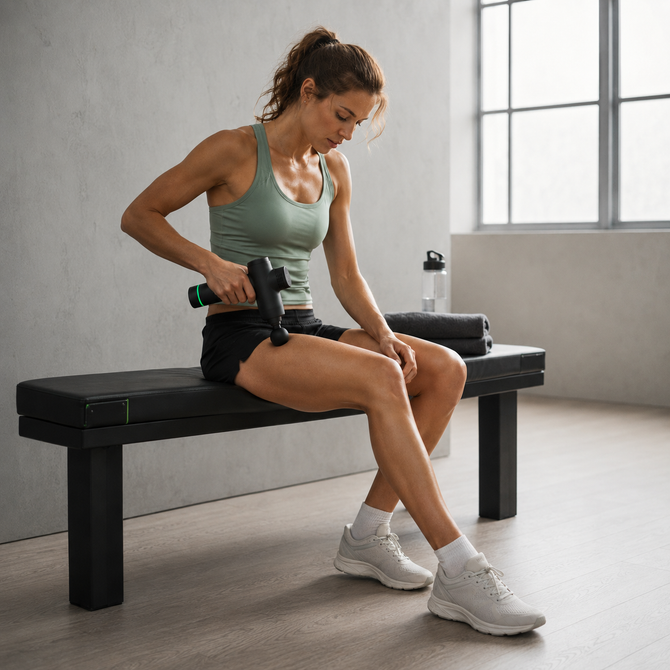
Hyperice Hypervolt 2 — The benchmark massage gun for daily recovery use -
Vyper 3 — Vibrating foam roller for large muscle groups
Compression:
-
Normatec 3 Legs — Sequential pneumatic compression for lower body recovery; the gold standard for endurance athletes
Heat and infrared:
-
Floe Infrared Sauna Blanket — Deep heat recovery and parasympathetic activation; use 60–90 minutes before bed for combined recovery and sleep benefits -
Hyperice Venom Go — Portable heat and vibration for targeted muscle groups
Nervous system:
-
Pulsetto Fit — Vagus nerve stimulation for parasympathetic recovery and sleep quality
For a full guide to recovery tools and the science behind them, see our articles on
Layer 6: Nutrition and Fuelling
No training setup is complete without a fuelling strategy. The right nutrition products are as much a part of your performance system as any device.
During training:
-
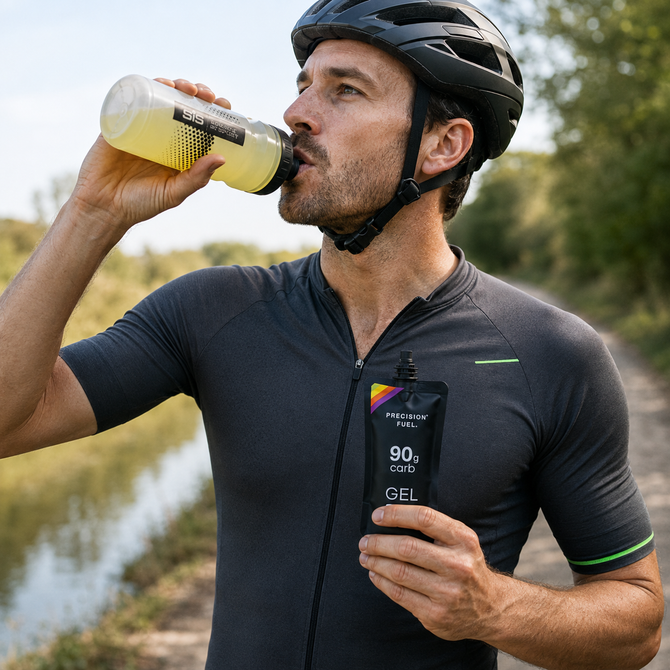
PF 30 Gel — 30g carbs per gel; the staple for regular fuelling intervals -
PF 90 Gel — 90g carbs for athletes targeting higher intake per hour -
PF Carb & Electrolyte Drink Mix — Combined carb and electrolyte in one bottle; ideal for cycling
Hydration:
-
PF 1000 Hydration Tablets — Mid-to-high sodium for most training conditions -
PF Electrolyte Capsules — Flexible sodium replacement without flavour or calories
Recovery nutrition:
-
TORQ 4 Recovery Drink — 4:1 carb-to-protein ratio for the post-exercise window -
EQUA Recharge Tonic + Creatine — Adaptogens and creatine for recovery and long-term power output
For detailed fuelling guidance, see our articles on
Putting It All Together: A Phased Build
You don't need everything at once. Here's a sensible progression:
Phase 1 — Foundation GPS watch + chest strap. This gives you accurate training data and the ability to train in zones properly. Everything else builds on this.
Phase 2 — Recovery Massage gun + magnesium supplement. Low cost, high impact. Addresses the most common recovery gap for athletes training 4+ days per week.
Phase 3 — Compression and Heat Normatec legs + Venom Go or Infrared Sauna Blanket. For athletes training at higher volume who need to recover faster between sessions.
Phase 4 — Power (Cyclists) 4iiii power meter. Transforms training precision on the bike and makes every interval session more purposeful.
Phase 5 — Advanced Recovery Red light therapy, vagus nerve stimulation, PEMF. For athletes who have the fundamentals dialled in and want to optimise at the margins.
Key Takeaways
- Start with a GPS watch and chest strap — accurate data is the foundation of everything else
- Add recovery tools before advanced training tech — most athletes are under-recovering, not under-training
- Power meters are the highest-impact upgrade for cyclists after a GPS watch
- Open-ear audio (Shokz) is the safest and most practical choice for outdoor training
- Build your setup in phases — each layer should be embedded before adding the next
-
Use the North Pulse guides to go deeper on any category:
GPS watches ·heart rate monitors ·headphones ·recovery ·fuelling